"Lifting Will Make You Bulky" Let's Dish About That
Updated: Aug 21, 2025

Let's get one thing straight: the idea that lifting weights will somehow magically make women look "bulky" is one of the
most persistent fitness myths around — and quite honestly, it has to die. As someone who has been through a lot physically, emotionally, and mentally, and who has also gained strength from strength training, I am compelled to talk about this from experience, and from what I observe on a daily basis within the fitness profession.
Your body appearance doesn't only depend on what kind of workout you're doing. It's a mixture of training type, diet, genetics, hormonal levels, and most importantly — your goal.
-Training Styles Are Not Uniform-
Let’s break it down. There’s a big difference between training for strength, training for hypertrophy (muscle growth), training for power, or training for endurance. And guess what? You’re not going to “accidentally” get huge muscles just by picking up a pair of dumbbells. Building serious muscle mass takes years of intentional, consistent hypertrophy-focused training — and often a high-calorie surplus.
So no, squats with dumbbells or heavy lifting a couple of times a week won't turn you into The Hulk. What it will do is tone you and make you lean, help your posture, boost your metabolism,
and have you feeling stronger, toned, and more confident in yourself.
-Your Nutrition Shapes Your Results-
The manner in which you consume food is an enormous
determinant of how your body responds to training. You can lift weights and get lean if you are at a caloric deficit. You can lift weights to maintain your body where it is at, or you can add muscle — it all hinges on caloric intake and balance of macronutrients.
Muscle does not just magically appear in one night. You need the right stimulus, recovery, and fuel. Your aim, then, is most crucial. If what you want is to look defined and fit, then weightlifting (while accompanied by smart nutrition and recovery) is just what will cause it to happen.

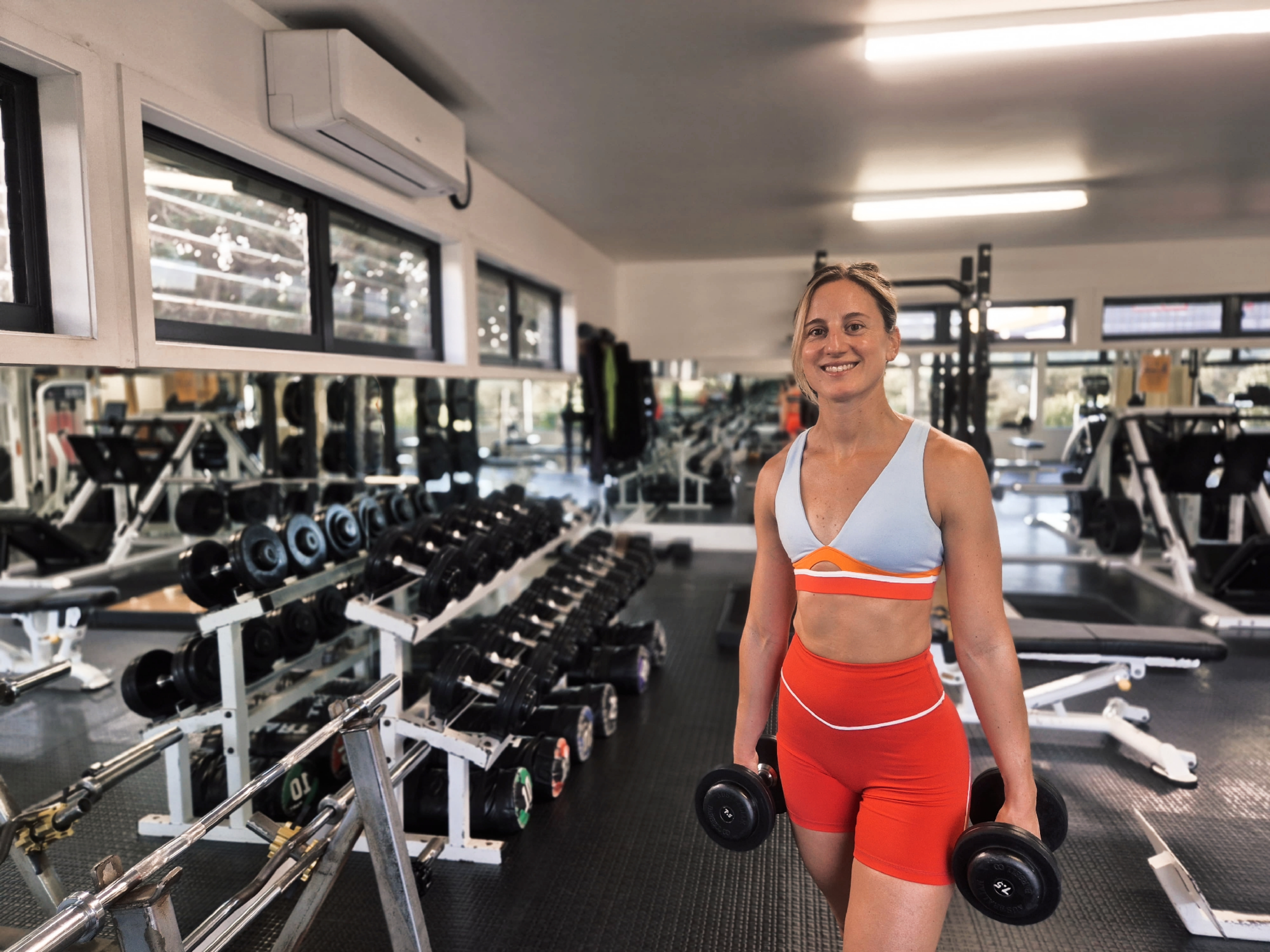
For example, I've been committed to training for years now — and I still wear the same top and bottom clothing size. I'm toned, of course, but when you lose fat and gain muscle, your body becomes denser, not bigger.
That's the sorcery of body recomposition: you feel more tight, you look lean, and your clothes fit better — not tighter.Yes, I do know that to build muscle, sometimes a little bit of caloric excess is needed.
But don't go mad and lose control. If you take training as a lifestyle -not as a quick fix-that increase in calories can be done slowly and in a controlled manner in a balanced way.A lot of times, when we see those dramatic changes with tremendous muscle buildup and an increase in body fat, that's usually because the process was hurried: massive amounts of food taken in a limited period of time to allow muscle growth to happen quickly. Followed by a fat reduction phase, trying to bring out the muscle from beneath. That's a good approach in some situations but definitely not the only one.
What we're looking for is long term, sustainable results. We don't want to just build muscle for the moment, but have that muscle stick long-term. And the truth is: the longer you build it, the greater the chances it will stick. It'll become part of who you are. That's the kind of strength that empowers — and that's the beauty of arriving there your way, on your terms.
-Social Media Isn't Always Real Life-
I get it how easy it is to scroll down social media and be intimidated. You see women who have carved-out glutes, ripped abs, or physiques that are incredibly muscular — and you think: "If I train like that, I'll look like that.

"But here's the truth: most of those physiques are actually built to be "bulky" first — intentionally — with high-calorie bulking phases, heavy hypertrophy training programs, and yes, in many cases, performance-enhancing substances. Some of these athletes will then cut to reveal that lean, muscular look. That's a strategy. That's what they're aiming for. And it doesn't happen by chance. So no, exercising a few times per week is not going to bring you those results — unless you're after them with purpose and a very specific plan. Which, again, is a choice. It always comes back to your goal.
-Fitness Is a Long-Term Game-
The thing that's best about training is that it adapts with you.
Once fitness is a lifestyle, you can shift your emphasis over time:
Eat more to build.
Eat less to lean down.
Train heavy or go light.
Do more cardio or tone it down.
Work on flexibility or mobility.
Prioritize power or endurance.
There is no one way to do it. You don't have to stay in one "box." You get to try things out. You get to play with the process. That's the freedom of consistency.
On that note, I would like to share a quote by Eric Thomas, “discipline is freedom”. He puts it this way: discipline gives you the power to manage your habits, your behavior, and your thoughts. Without discipline, we're at the mercy of our desires, distractions, and circumstances. With discipline, however, you get to call the shots. You create the course that you want to take, and that is real freedom. So rather than viewing discipline as a restriction, attempt to view it as the key that will open your potential and your freedom. It's not about constraining yourself; it's about enabling yourself.
-Strong is Feminine-
Let's remember muscle mass is key to women's health — not for appearance, but for overall health in the long run. We start to lose muscle fairly soon, even as soon as we are in our 30s. And it affects metabolism, posture, energy, hormone production, bone density — everything.Weightlifting helps us preserve and accumulate that precious muscle mass. It helps us age more positively, feel better, and move with confidence. So next time someone says “careful, you’ll get bulky” — smile, lift, and keep going.


Comments